
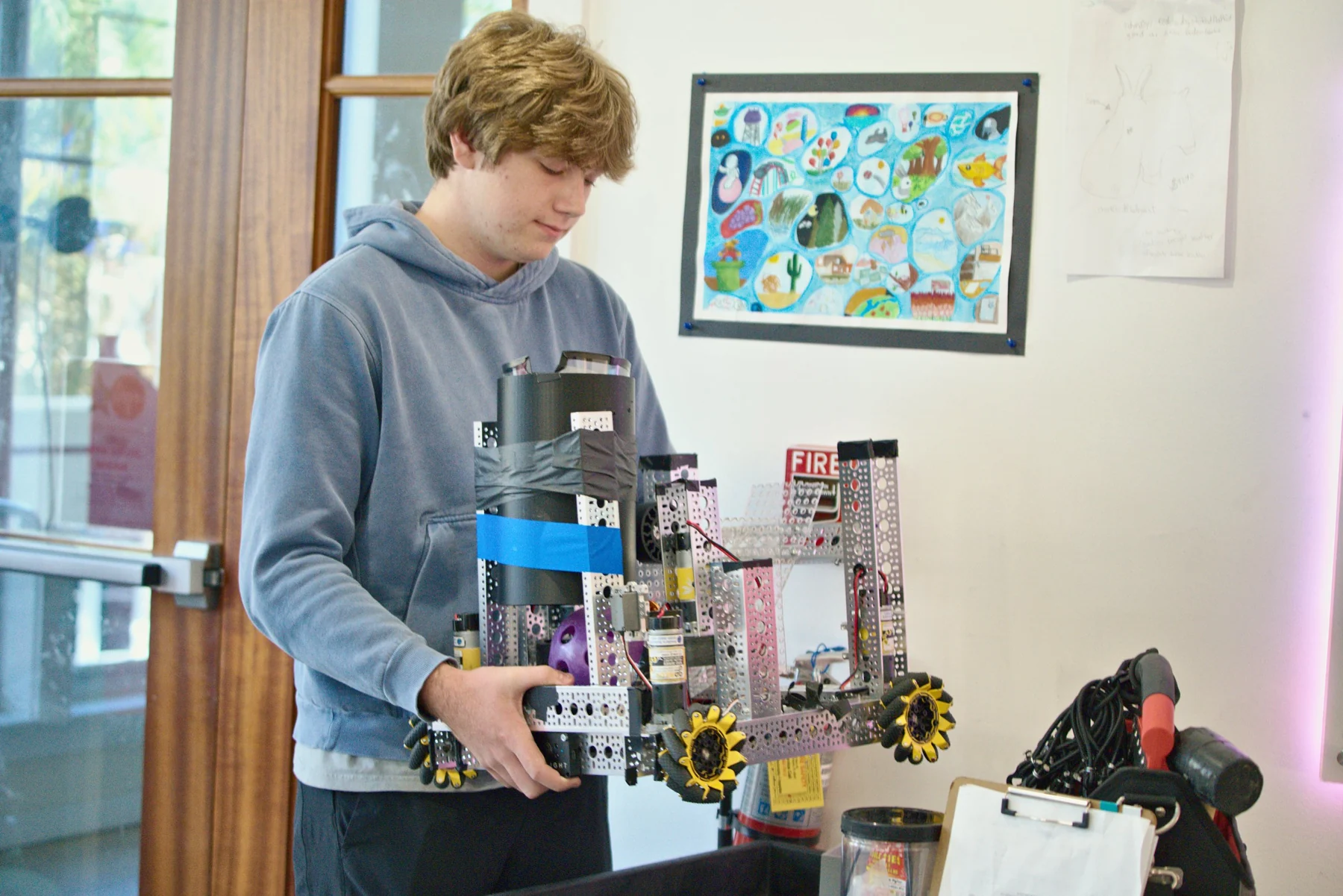
Students can adapt each project to suit their own learning style, and that process of adaptation is what produces work with real content behind it. Along the way, every student asks questions, engages in research, writes a formal paper, and creates a product that has to hold up when they stand in front of people and explain it.
The arc of a project
Ask
A project starts with an essential question or a real problem, often one tied to what students are studying in science, history, or social studies, and sometimes one brought in by a community partner.
Research
Students dig into the content the question demands. This is where the academic standards live: the reading, the math, the science, and the writing a student needs to make progress.
Build
Students create a product. It might be a robot, a documentary, a business plan, a scale model, a recorded song, or a formal paper, and the choice is shaped by how each student learns best.
Present
Every project ends in front of an audience of classmates, teachers, families, or professionals. Explaining and defending the work is where understanding becomes visible.
Reflect
Students look back at what worked, what didn't, and what they would change, which is the habit that carries into every project after it.
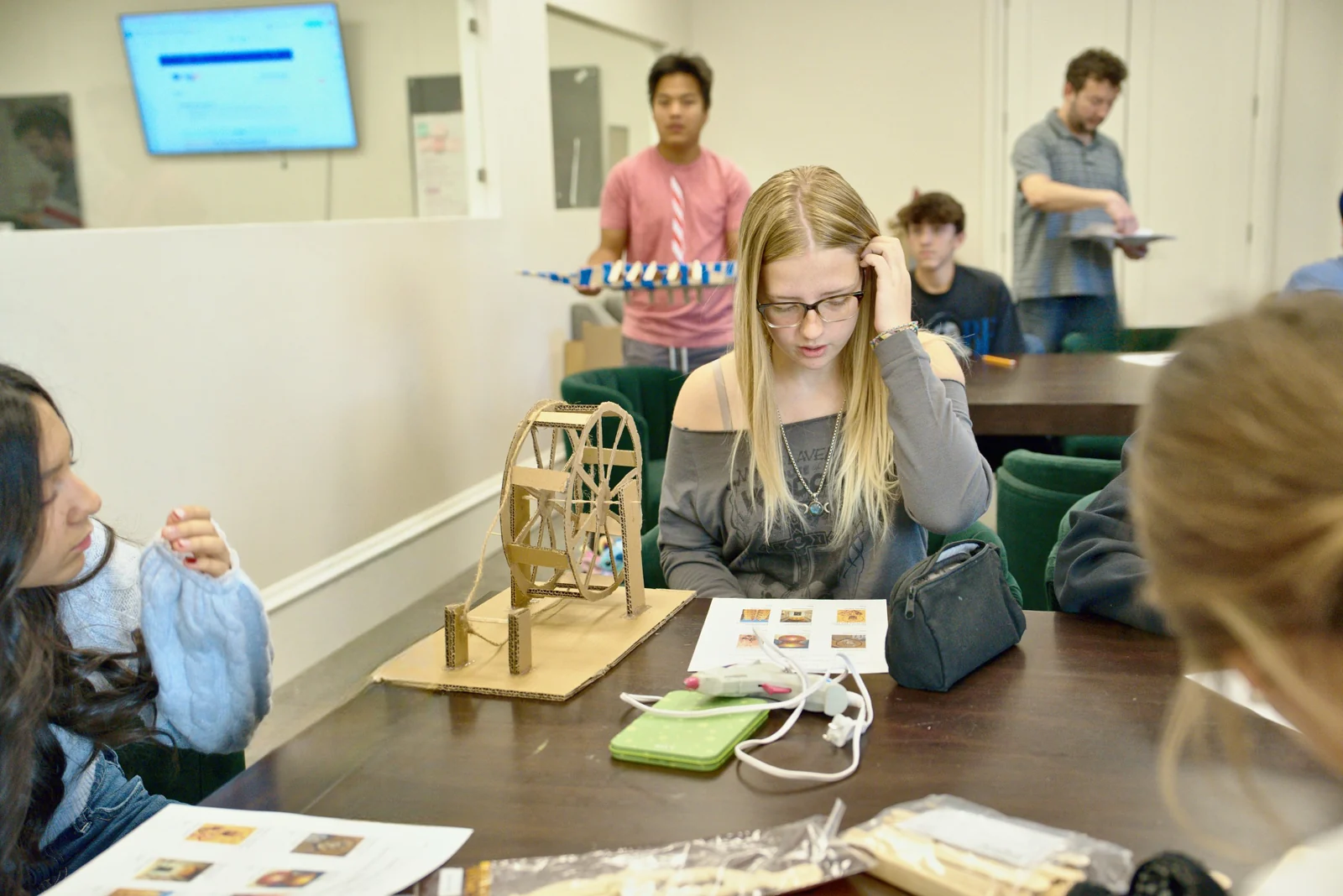
Subjects overlap the way they do in real life
Our students don't memorize standards from a checklist. In a project, math, science, history, and language overlap the way they do outside school: a rocketry build is physics and algebra, a Nicaragua service trip is language and economics and geography, and a Rock on the Road tour is music, logistics, and marketing.
Project-based learning is a hands-on complement to a strong academic core, not a replacement for it. Direct instruction and inquiry are built in, so a student who needs to shore up a skill gets taught it, one-on-one or in a small group, right when the project calls for it.
What projects look like at Ohana
Engineering and design
Design and build a competition robot, model and 3D print its parts in AutoCAD, and test it against a timed course.
Aerospace
Plan a flight between two Florida airports on the simulator, accounting for weather, navigation, and aircraft performance.
Entrepreneurship
Build a brand and a pitch for a student business idea, the way Ohana students once did through Amavida Coffee's entrepreneurship program.
Music
Write, record, and release original songs through Ohana Records, then plan and run a performing tour.
Service and civics
Organize a food drive for Food For Thought, including the logistics, the communication, and the count at the end.
Culture and language
Prepare for a cultural trip by studying the history, language, and economy of the place, then document the trip for the people who stayed home.
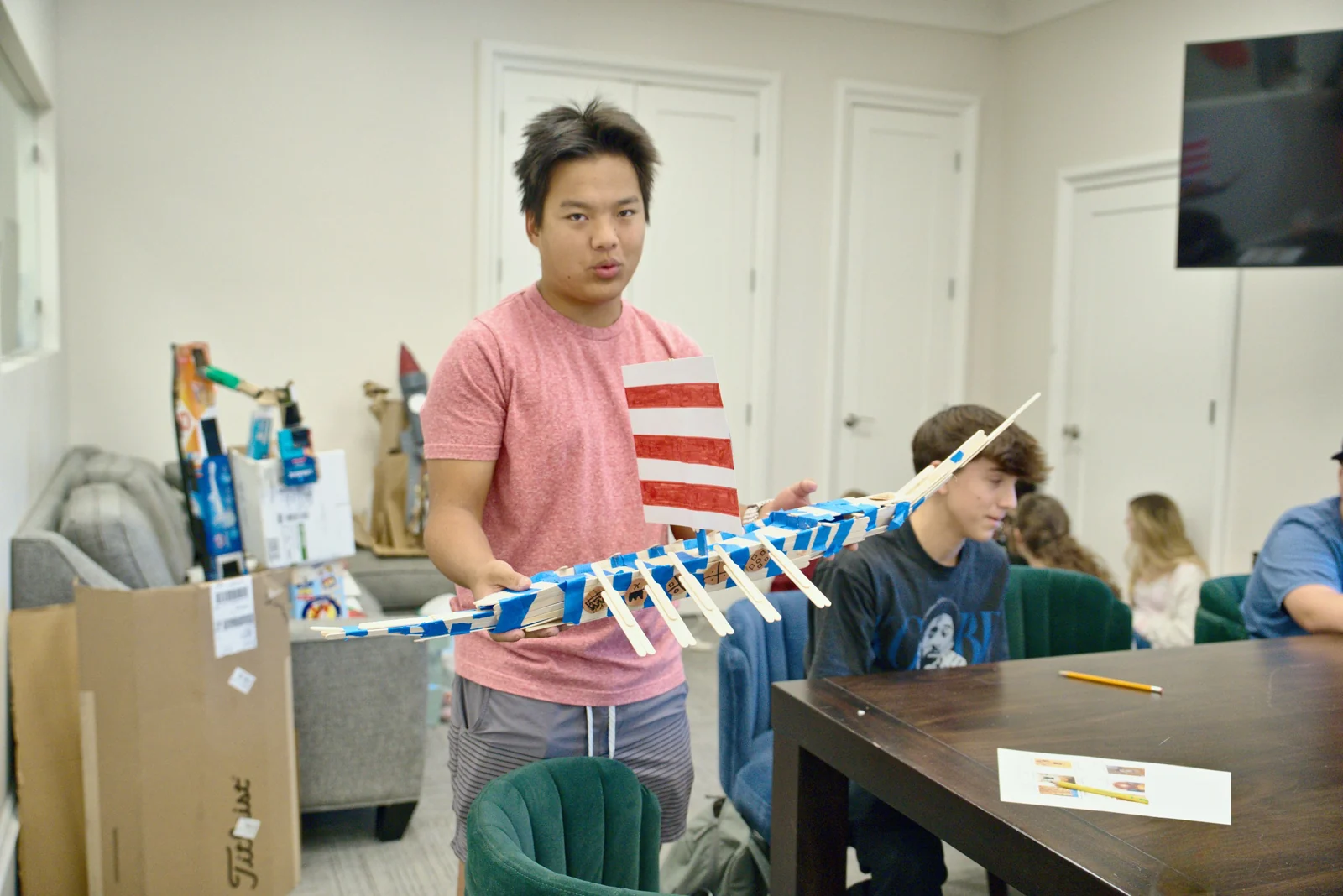
How we grade it
Each project is assessed against curricular standards on our 0 to 5 scale. A 5 means the student understands the standard well enough to apply it somewhere new, which is exactly what a good project asks them to do. Parents see which skills were demonstrated, not just a grade for the whole thing.