
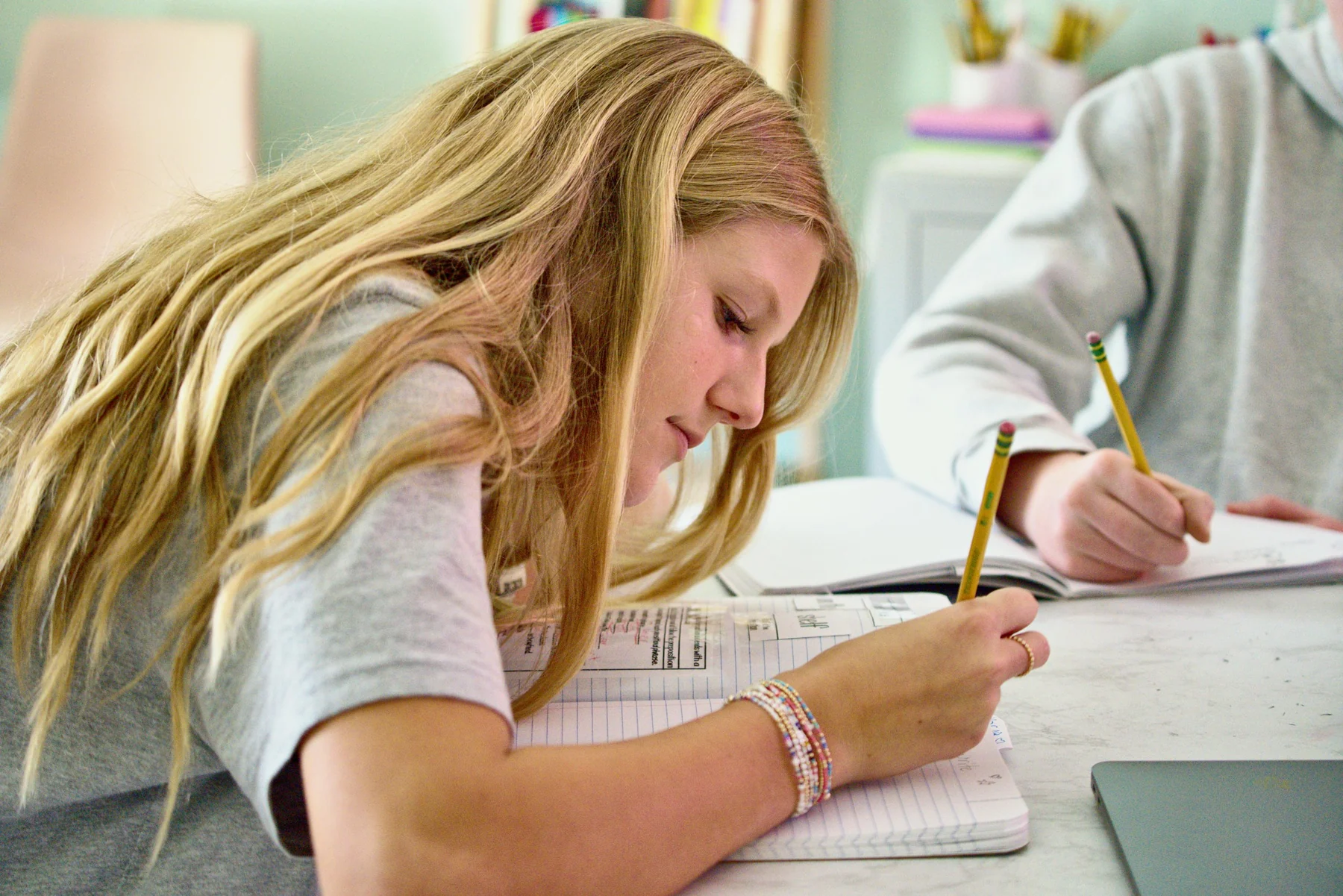
Students at Ohana learn the content of each course, and they also acquire, practice, and apply the skills to use it. Every lesson asks the question a textbook never does: what will you do with this?
Five models, one classroom
Project-Based Learning
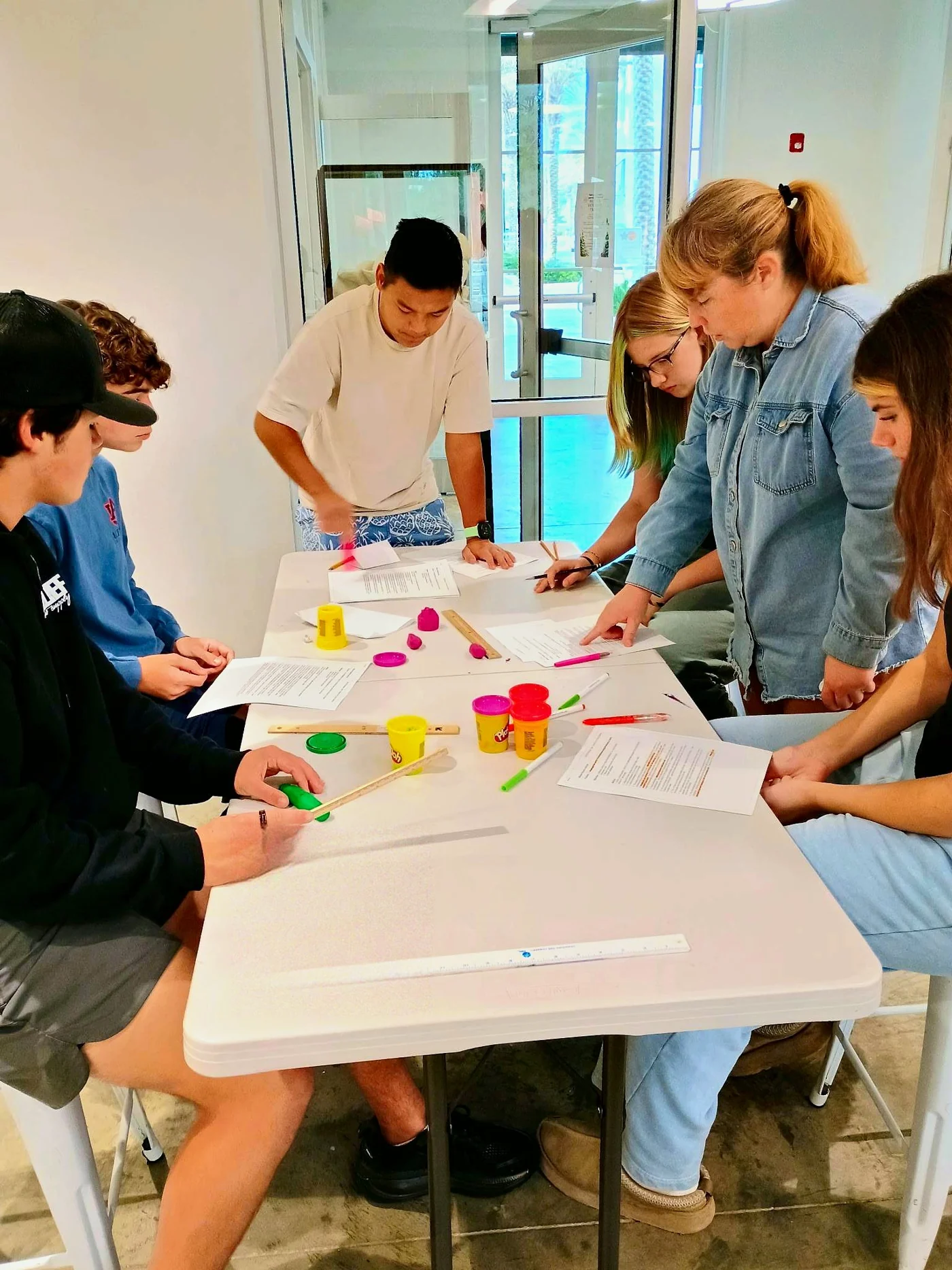
Experiential learning focused on an essential question or problem. Students adapt the project to their own learning style, research it, write it up, and present a finished product to a real audience.
How a project worksInquiry-Based Instruction
Students explore content by posing, investigating, and answering a question or set of questions. We use several inquiry models, with project-based learning as the backbone.
Direct Instruction
As students complete coursework through projects, flipped lessons, and inquiry, direct instruction is built in so they can work one-on-one or in small collaborative groups with their teachers and shore up the fundamentals.
Independent Learning
Responsibility for the learning process shifts, step by step, from the teacher to the student. We help students understand their own learning styles and needs, and give them the structure to own their work.
Online, Dual-Enrolled, and Distance Learning
Students can reach well beyond what we teach on campus through online courses, dual enrollment for college credit, and distance learning, and we work with them to make the most of each path.
Enrichment and PBL days
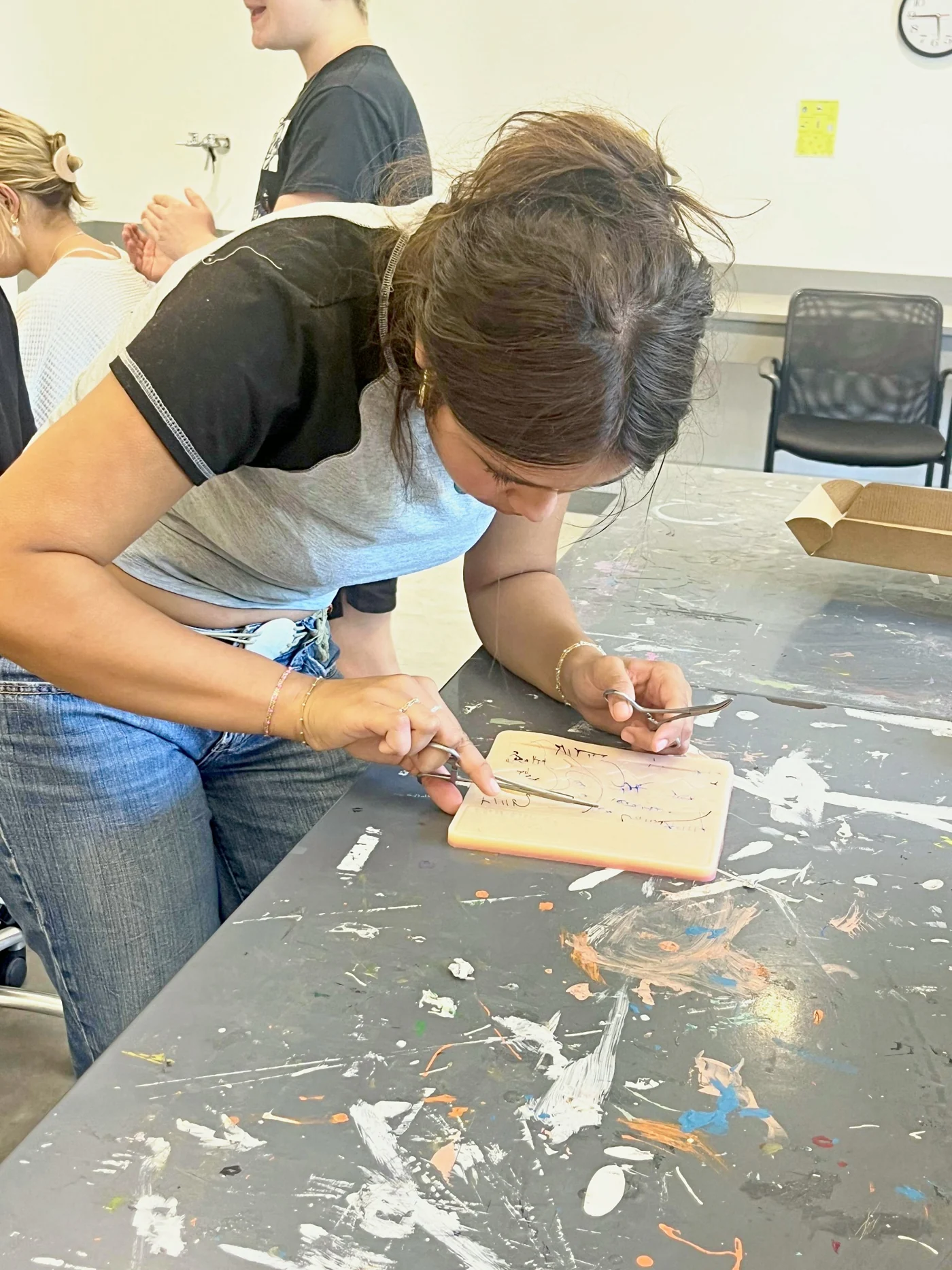
Hands-on enrichment days, from biology labs and essay workshops to film studies, sports management, and foreign language projects, let students chase an interest with the depth a normal period never allows.
How we assess
Assessments happen regularly inside each classroom so teachers always know whether a student is progressing. Every assessment is tied to a curricular standard and scored on a 0 to 5 scale, where 0 shows no formal understanding and 5 shows that the student has mastered the standard and can apply it. Parents see what their child understands, not just a letter average, and teachers see exactly where to go next.
Standardized testing, kept in its place
Standardized tests are one tool among many. Students in kindergarten through 7th grade take the Iowa Assessment each February, students start the PSAT in 8th grade, and 10th and 11th graders take the PSAT/NMSQT, which qualifies juniors for the National Merit Scholarship Program. Every high school student gets targeted SAT and ACT preparation through Kaplan.
Pre-K through 12, one community
Ohana is one school at every stage. Our youngest learners start in Ohana Day School, our Pre-K program for three and four year olds. The Elements, Foundations, and Middle Years teams carry students from kindergarten through 8th grade with the same project-based approach, and high school adds internships, dual enrollment, AP courses, and the programs that give Ohana graduates stories most college applicants can't tell.
What this means for your child
- Classes of about 12 to 15 students, so teachers know how each child learns and notice when something changes.
- A curriculum tied to recognized standards, taught through projects that end in front of a real audience.
- Scores that tell you what your child understands, on a 0 to 5 scale, instead of a single average.
- Room to go deeper through dual enrollment, AP courses, and online options when a student is ready.
- A balanced-year calendar with five extended breaks for rest, travel, and enrichment.
Project-based learning
High school
STEM and aerospace
Early childhood and Pre-K